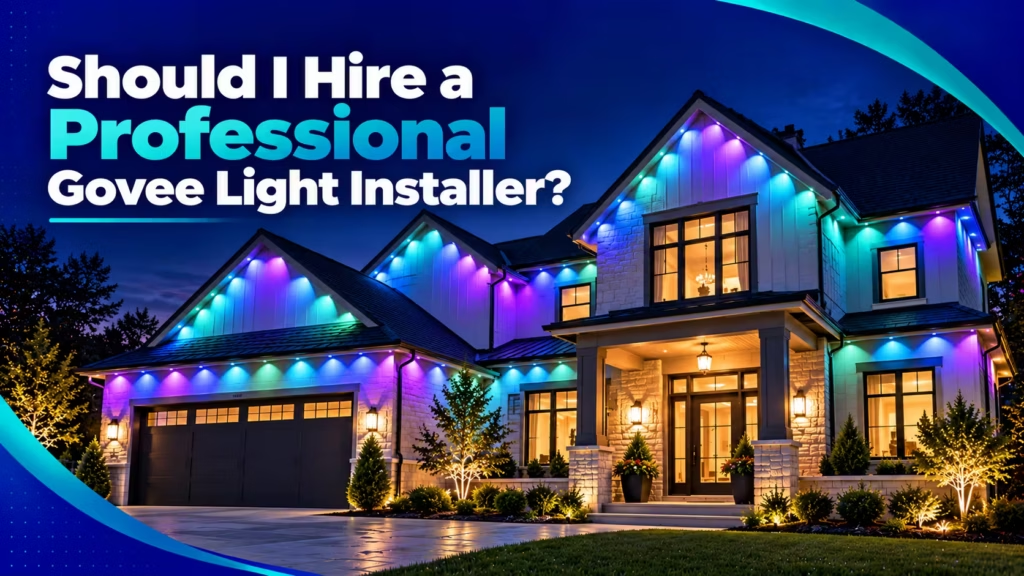
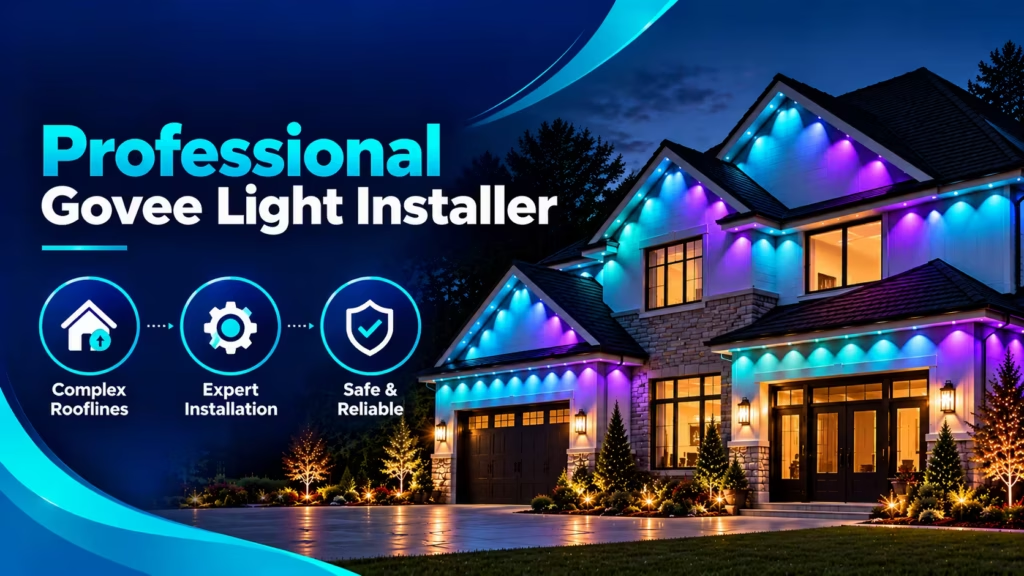
You should consider hiring a professional Govee light installer when your roofline has multiple elevations, second-story sections, steep peaks, difficult corners, long runs, or complicated power access.
A simple 60-foot eave can be a reasonable DIY project.
A 180-foot roofline with two stories, six corners, two dormers, and several transitions is a completely different job.
The real question is not whether Govee lights are DIY-friendly. They are.
The better question is whether you can install the entire system with consistent spacing, clean transitions, secure mounting, controlled cable routing, and reliable connections.
That is where professional Govee light installation starts providing real value.
| Your Roofline | Best Choice | Why |
|---|---|---|
| One-story, straight 60-foot eave | DIY | Easy access and few transitions |
| 100-foot ranch with two corners | DIY or professional | Relatively simple layout |
| Two-story front elevation | Professional | Height makes consistent installation harder |
| Multiple gables and dormers | Professional | More transitions and routing decisions |
| 150-200-foot roofline | Professional | Long runs need careful planning |
| Six or more corners | Professional | Transitions require more precision |
| Steep roof sections | Professional | Access becomes a major concern |
| Difficult power location | Professional | Cable and controller placement need planning |
| Cut-and-splice installation | Professional recommended | Incorrect connections can create failures |
| Aluminum track installation | Professional | Track requires accurate measuring and mounting |
| Simple low-level patio area | DIY may work | Easier access and fewer complications |
When evaluating a Govee project, we would not start by asking how many lights the homeowner purchased.
We would start by looking at the house.
The roofline tells you almost everything about the installation difficulty.
For example, imagine two homes with approximately 120 feet of lighting.
The first has one straight front eave and two corners.
The second has a garage, two-story elevation, front gable, dormer, six corners, and a side return.
They have the same approximate footage.
They are completely different installations.
The second property requires more ladder repositioning, more planning, more transitions, and more attention to cable routing.
That is why Govee outdoor light installation should be evaluated by roofline complexity, not just linear footage.
DIY is not automatically a bad idea.
For the right house, it can be a reasonable project.
A homeowner who is comfortable using a ladder, drill, measuring tape, level, and basic mounting hardware can handle a straightforward installation.
Govee provides mounting materials and installation instructions for its permanent outdoor lighting systems. Its guide recommends cleaning the surface, positioning the lights consistently, using adhesive and screw clips, and testing the system during installation.
A simple DIY project might look like this:
There is little reason to hire someone simply because the lights are permanent.
The question is whether the physical installation is within your skill and comfort level.
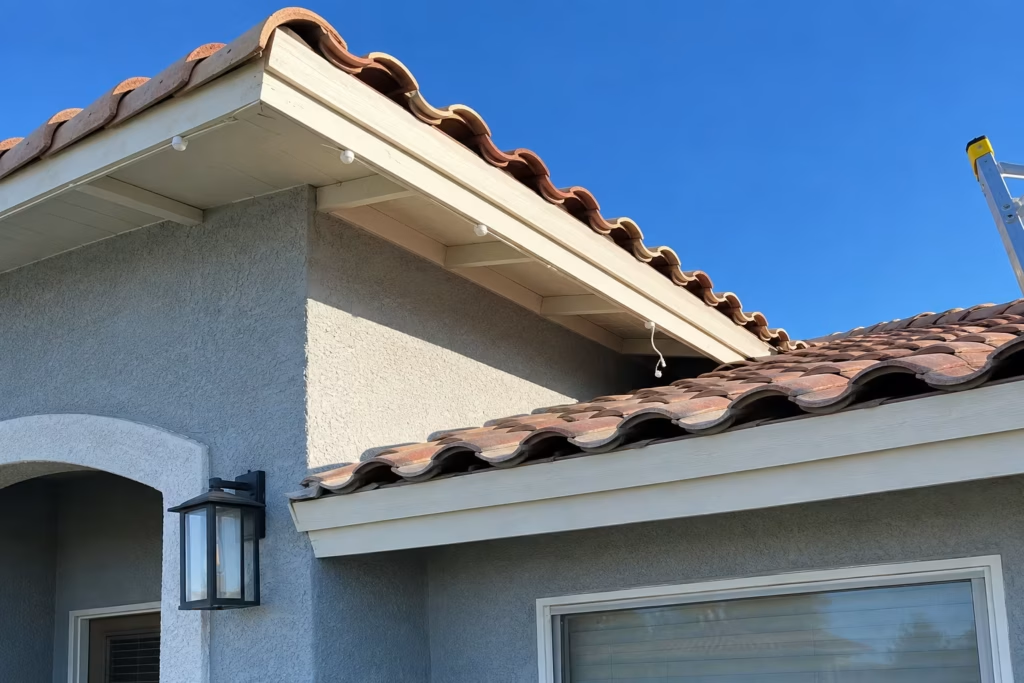
This is one of those details that looks insignificant during the day but becomes obvious after sunset.
If one section is mounted closer to the wall than another, the illuminated pattern can change.
Professional installers usually establish a consistent reference line before attaching the lights.
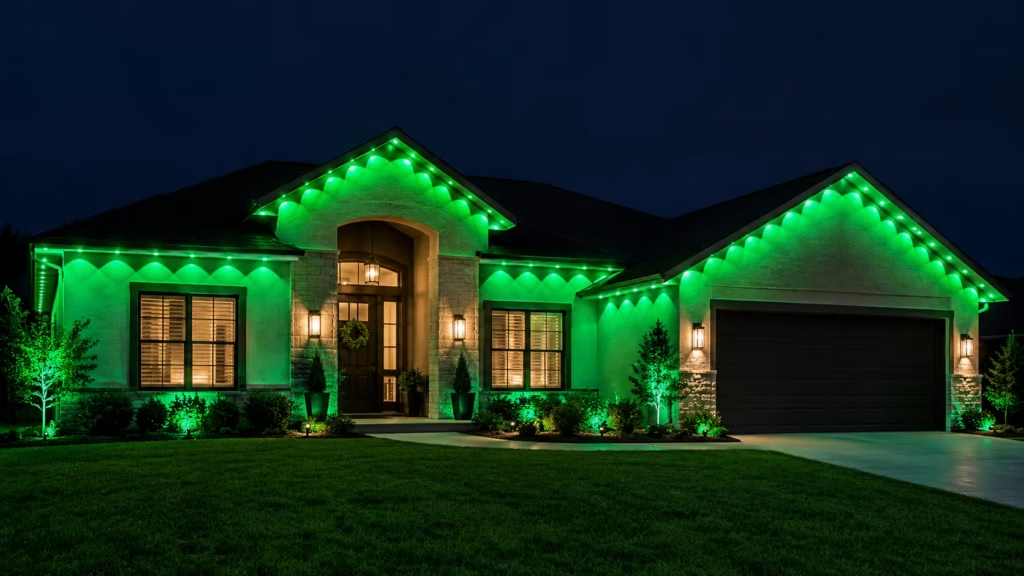
Corners are where rushed installations often reveal themselves.
The installer needs to account for the direction of the roofline and avoid forcing the cable into sharp or unnatural bends.
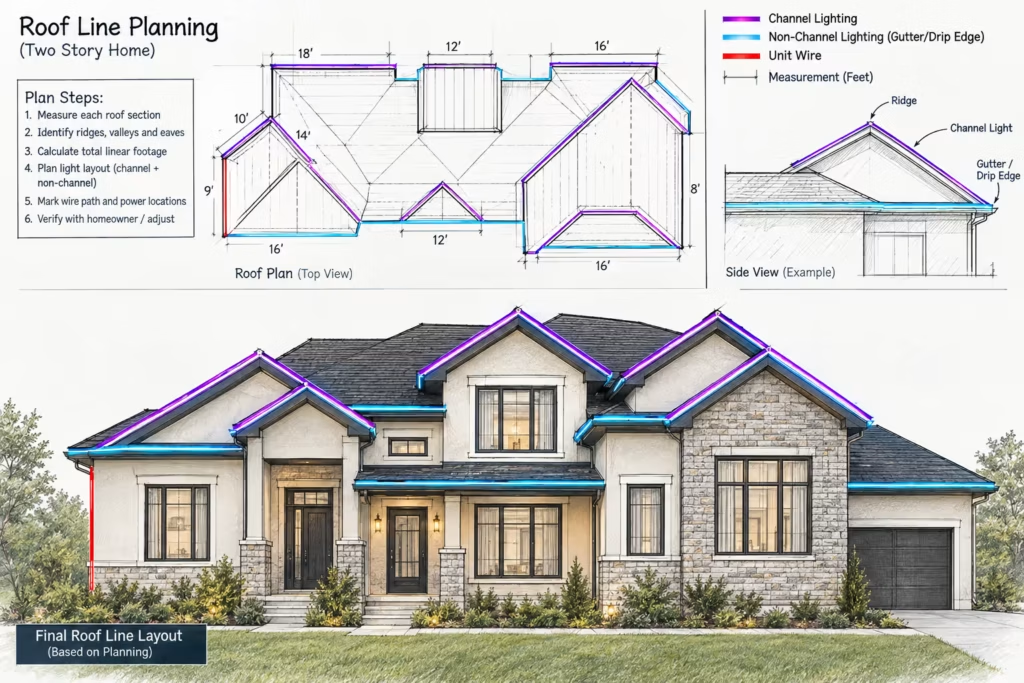
A professional looks at the house as a complete elevation.
The goal isn’t simply to cover every available foot.
The goal is to make the lighting follow the architecture naturally.
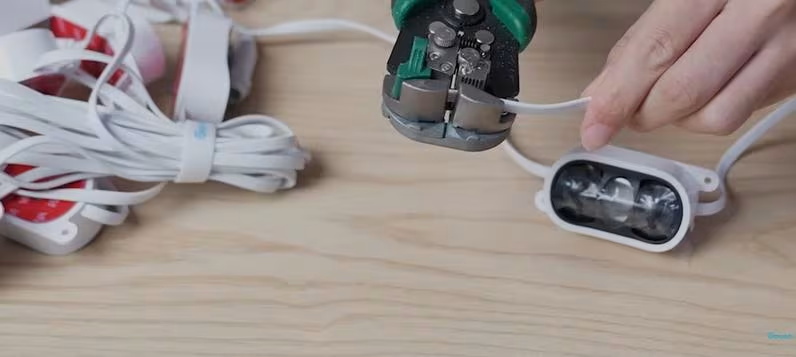
Cutting permanent lights is not something I recommend doing casually.
Once a light string is cut, the installer has to be certain the new section can be connected correctly and that the resulting layout works.
Govee provides specific instructions for cutting, splicing, and extending compatible systems.
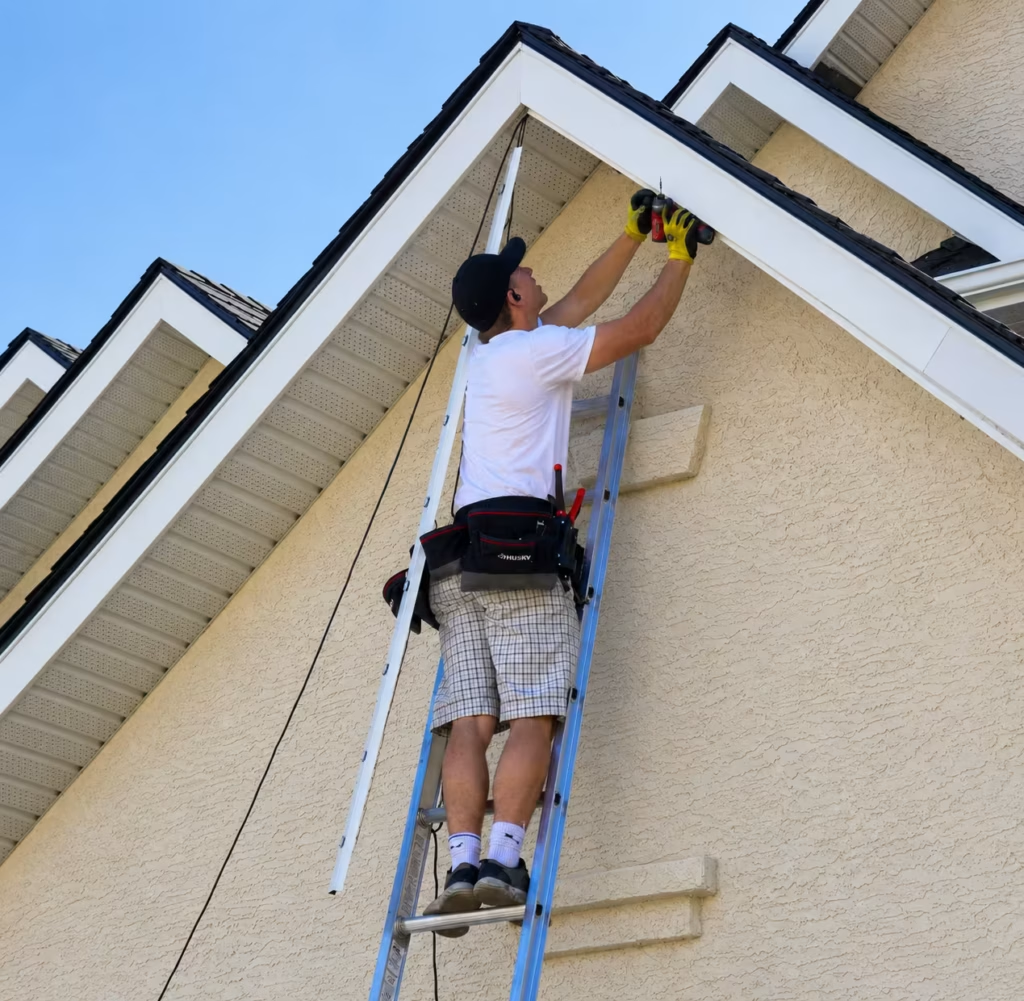
This is perhaps the most important reason to hire someone.
A beautiful lighting system isn’t worth taking unnecessary risks on a high roofline.
If the installation requires repeatedly reaching awkward second-story sections from a ladder, professional access equipment and experience can make a significant difference.
We recently completed a Govee Light Installation in Wellington, FL, covering approximately 180 feet of roofline on a two-story home.
The layout includes:
Homeowner purchased enough lights and started at the front corner.
That is exactly where we slow the project down.
The first question is not, “Where do we stick the first light?”
It is:
“Where should the entire system start and finish?”
The installer needs to understand the full route before mounting anything.
For supported Govee Pro and Govee Prism systems, Govee allows cutting and splicing, with combined lengths up to 200 feet when extensions are used within the product limits.
But it also means the installer has to know exactly where those sections should be cut.
Cutting at the wrong location can turn a clean roofline into a difficult connection problem.
Temporary Christmas lighting and permanent smart lighting are related, but they aren’t identical services.
A temporary installer may be excellent at hanging traditional string lights.
Permanent outdoor lighting requires additional considerations involving smart controllers, product-specific connections, roofline planning, mounting, and potentially cutting or splicing.
I would rather hire someone who has installed fewer total feet of lighting but understands the particular Govee system than someone who has hung thousands of feet of temporary lights without working with permanent smart systems.
Our pricing is job-based, not per foot. Labor starts from $390 for a single-story home. Two-story and complex rooflines are quoted from a photo, because the price depends on height, access, corners and how many runs and splices the roofline needs. The Govee lights are bought separately, so you only pay for the length your home actually needs.
To get an exact number, text a photo of the front of your home to (619) 374-8127. We mark the proposed light placement on your photo and send a fixed quote within 12 hours. You approve it before anything is scheduled, so there are no surprises on installation day.
For a complicated two-story home, yes.
The decision should come down to the installation difficulty rather than the price of the light kit.
If you can safely access the roofline, measure accurately, plan the complete layout, and install the system carefully, DIY can work very well.
If the roofline requires multiple ladders, complicated transitions, custom splicing, difficult access, or detailed alignment, especially when professionals install Govee lights on two-story homes, professional installation can be a much better investment.
The lights themselves are only one part of the project.
The house determines the difficulty.
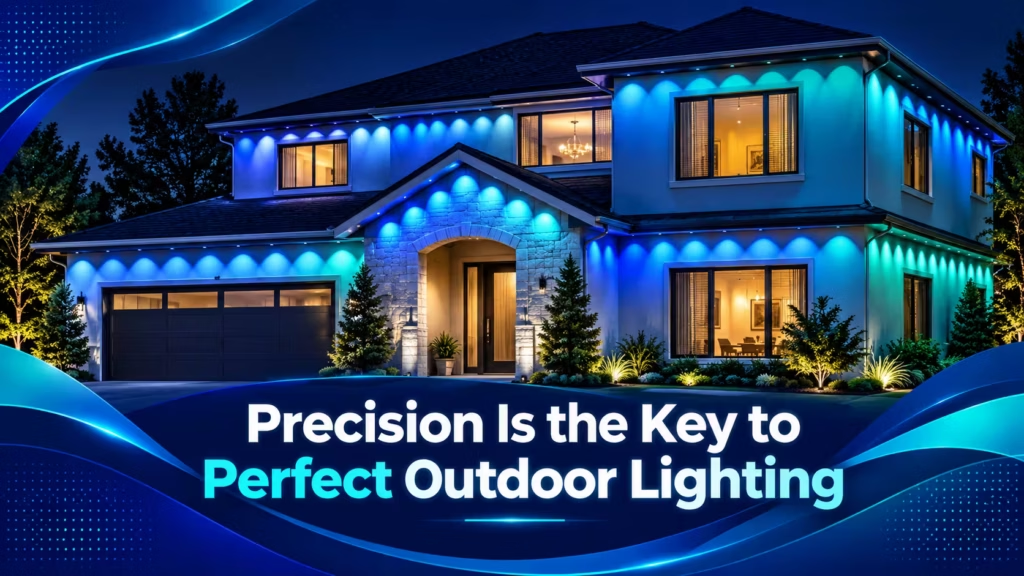
If your home has a simple, low, straight roofline, DIY light installation can be completely reasonable.
But if your home has two stories, multiple peaks, dormers, long runs, difficult corners, or complicated power access, professional Govee Lights installation becomes much more attractive.
When you are spending hundreds or thousands of dollars on permanent outdoor lighting, the installation deserves the same attention as the lighting system itself.
Goveelightinstallationnearme.com installs Govee permanent outdoor lights across the US. Find your city to see local service details, or text a photo of your home to (619) 374-8127 for a quote within 12 hours.
They plan each transition before mounting, controlling spacing, cable direction, connector placement, and visual alignment around corners.
Ideally, yes. A complete installation should include system testing, app pairing, scheduling checks, and confirmation that the homeowner can control everything.
Ask about model experience, mounting methods, cutting, splicing, power routing, pricing, warranties, app setup, and how complex roofline transitions will be handled.
Usually, yes when runs approach the system’s maximum configuration because connections, driver requirements, routing, and troubleshooting become increasingly important.
Send a photo, get a free Govee Installation quote quickly.
Fast, dependable Govee light installation with expert service, lasting performance, and exceptional craftsmanship.